
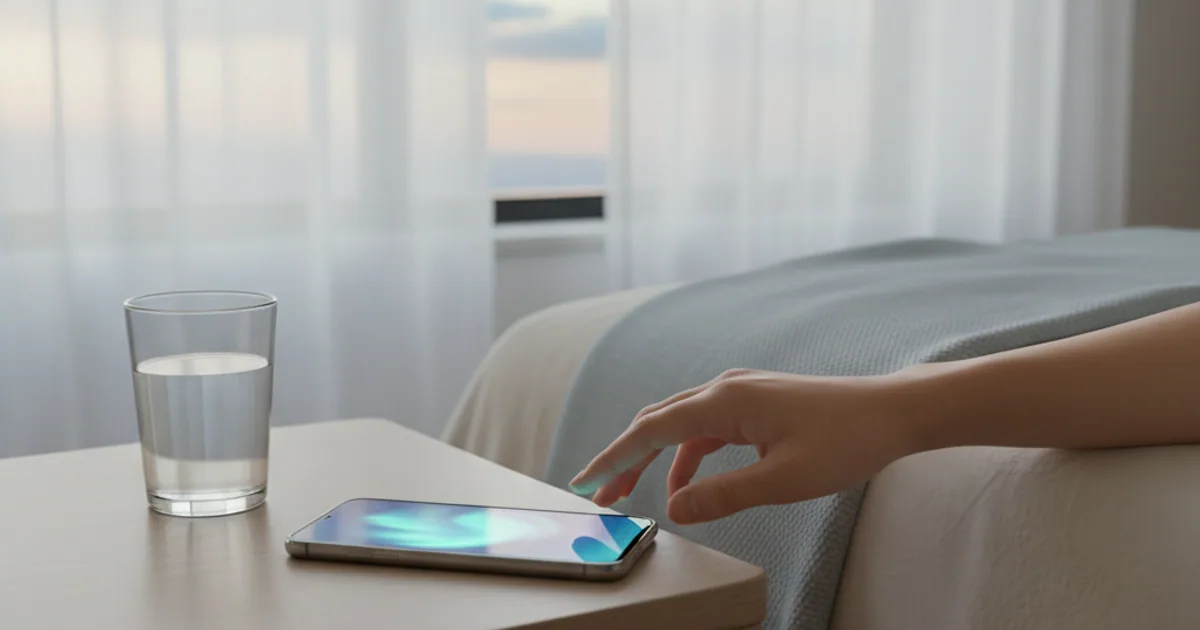
Blue light is a minor factor in why scrolling wrecks your sleep. The two big problems are simpler and far more important: you stay up later than you meant to, and engaging content keeps your mind switched on when it should be powering down. The reliable fix is keeping the phone out of bed, not buying a filter or flipping on night mode.
This one matters because the blue-light story is everywhere, and it is mostly a distraction, sometimes literally a profitable one. Let us take the real mechanisms first.
The two things that actually cost you sleep
Displacement. This is the boring, decisive one. When you scroll in bed, you stay awake longer. The feed has no natural ending, so "five more minutes" becomes forty, and you fall asleep later than you planned. The harm is not mysterious. You simply got less sleep because the phone kept you up. No amount of screen tinting touches this.
Arousal. Sleep needs a winding-down body and a quieting mind. Engaging content does the opposite. An argument in the comments, a tense piece of news, an exciting video, a stab of social comparison, all of it switches your mind on, sometimes emotionally, exactly when it should be drifting off. A racing or anxious mind is hard to fall asleep with, and the content in your feed is built to produce one. This is especially true of distressing news, which has its own article: doomscrolling and anxiety.
Between them, displacement and arousal explain most of why phones and sleep do not mix. Notice that neither has anything to do with the color of the light.
So where does blue light fit?
It is real, just small. Light in the bluer range does nudge the body clock and can modestly suppress the hormone that signals nighttime to your brain. In a lab, with bright light for a long stretch, you can measure an effect.
But your phone at arm's length, for a normal session, is a weak light source compared to the daylight your body evolved around. The effect is there, and it is minor next to simply being awake too late with an activated mind.
A calm, dim, warm-tinted screen that keeps you scrolling until 1 a.m. will hurt your sleep far more than a bright white one you put down at ten. The timing and the engagement are the story. The color is a footnote.
Why filters and night mode disappoint
Blue-light filters, night mode, and amber glasses all target the smallest of the three factors and ignore the two big ones. So the evidence that they meaningfully improve sleep is weak and underwhelming.
There is also a sneaky backfire. Turning on night mode can feel like permission, like you have made scrolling in bed safe, so you do it longer. If the filter convinces you to stay up an extra half hour, it has made your sleep worse, not better, by feeding the one factor that matters most.
That is the trap of a fix aimed at the wrong target. It treats the footnote and leaves the headline untouched.
The fix that actually works
Since the real problems are staying up late and staying mentally engaged, the solution has to address those directly. It is almost embarrassingly simple.
- Keep the phone out of the bed. Charge it across the room, or in another room entirely. This is the single highest-value change, because it removes both the temptation to stay up and the easy access to arousing content right at bedtime.
- Give yourself a soft landing. Decide on a rough hour when the feeds close for the night, so the wind-down actually happens instead of getting swallowed by one more video.
- Do not rely on the filter. A warmer screen is fine, but do not let it talk you into a longer session. The color was never the problem.
If your trouble is specifically staying in bed scrolling, or pushing bedtime back to reclaim time, that has its own emotional logic worth understanding: bedrotting and revenge bedtime scrolling.
The honest summary: stop blaming the light and start moving the device. The phone out of reach beats any filter you can install, because it fixes the two things that actually keep you awake.

Comments 0
No comments yet. Be the first to share your thoughts.